Wooden Montessori Balance Toy Set: Calm Skills-Building Play
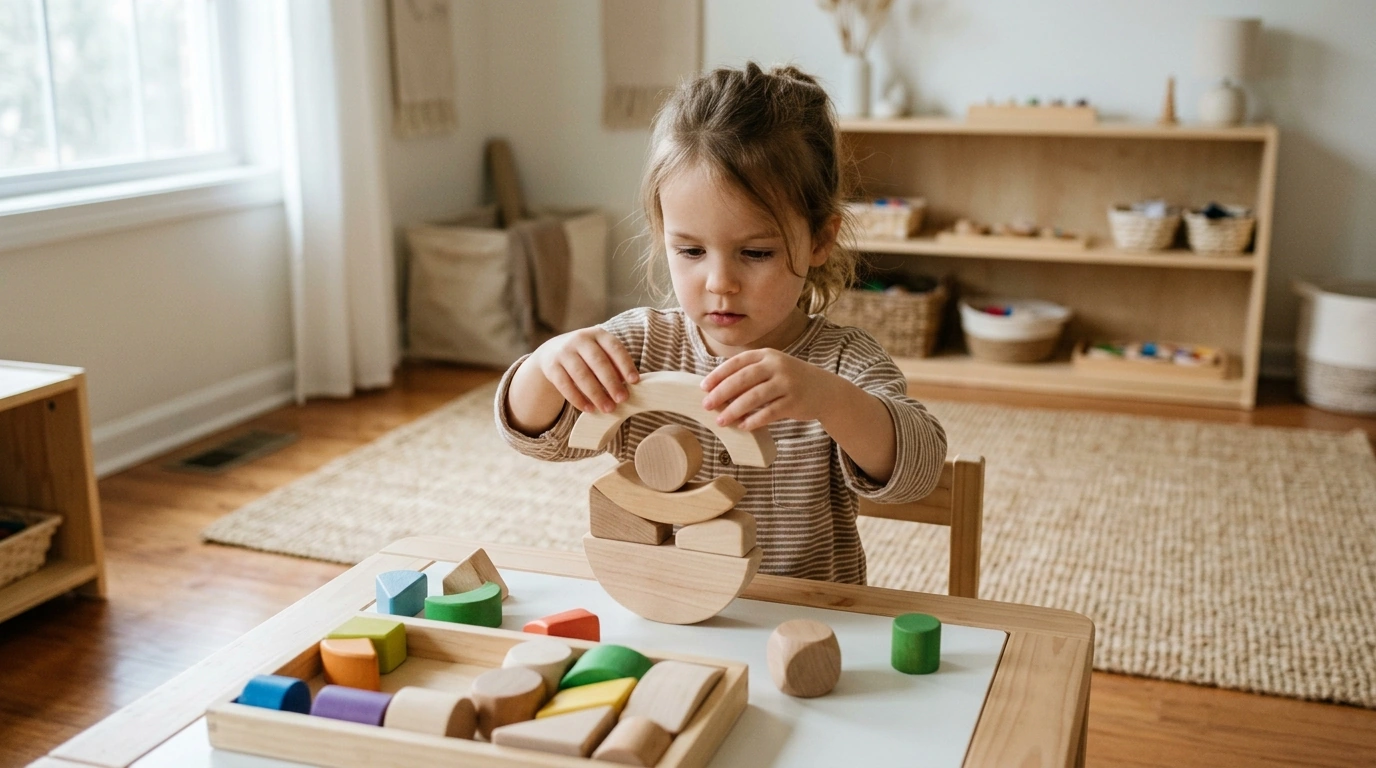
Wooden Montessori Balance Toys Set for Early Learning and Fine-Motor Play
Balance play turns simple wooden pieces into a hands-on challenge that supports coordination, focus, and early problem-solving. A well-made balancing set invites open-ended stacking, tipping, testing, and rebuilding—so the play can grow with a child, from quick “I did it!” builds to more complex patterns and cooperative games. For more guidance, see 20 Best Montessori-Friendly Toys By Age Group.
If you’re looking for a screen-free activity that feels calm but still engaging, the Wooden Montessori Balance Toys set is an easy addition to play shelves, classrooms, or therapy spaces. It pairs naturally with other quiet table-time favorites like the Wooden Solar System Puzzle Board for a simple rotation that keeps interest fresh. For further reading, see 20 Montessori-Friendly Toys.
What Makes Balance Play So Valuable
Balancing games look simple, but they ask kids to coordinate small movements with big ideas—like stability, symmetry, and “what happens if I move this piece over there?” Done regularly, this kind of play supports development in multiple ways:
- Hand–eye coordination: careful placement, tiny corrections, and controlled movements help kids line up what they see with what their hands do.
- Fine-motor skill building: pinching, grasping, rotating, and stabilizing pieces strengthens small muscles used for early writing and self-care tasks.
- Early math thinking: children naturally compare sizes, notice symmetry, and experiment with weight distribution while they build.
- Patience and persistence: towers wobble, bridges collapse, and kids learn to reset and try again without a “right answer” prompt.
- Imaginative play: pieces can become animals, mountains, bridges, a forest path, or props for storytelling.
Play-based learning is widely recognized as essential for healthy child development, including cognitive and social growth (see the American Academy of Pediatrics’ overview on the importance of play).
How to Use the Set at Different Ages
One of the best things about balance toys is how easily the same pieces can meet different skill levels. Small tweaks—like adding a “rule” or changing the surface—can turn beginner stacking into a real strategy challenge.
Toddlers (with supervision)
- Start with simple stacking and sorting by shape or color.
- Keep challenges short: “Can you stack three pieces?” then celebrate and reset.
- Use a stable surface (low table, play mat on a hard floor) to reduce frustration.
Preschoolers
- Add prompts like “build it taller” or “make yours match mine.”
- Encourage planning: “Which piece should go on the bottom?”
- Introduce gentle constraints: “Only curved pieces” or “Only two colors.”
Early elementary
- Try timed builds, cooperative challenges, and symmetry experiments.
- Invite predictions: “If we move this piece one inch, what will happen?”
- Let kids create rules and teach them to a sibling or friend.
Keep it interesting with rotation
Switch between free play, quick prompts, and small “missions.” On another day, follow balance play with a calm, seated activity like the Wooden Solar System Puzzle Board to extend focus without turning play into a lesson.
Easy Games That Keep Kids Engaged
When kids need a nudge (or when you want a group activity), these quick games add structure while still keeping the play open-ended.
- Steady Hands: build a tower one piece at a time; if it falls, rebuild using a different base.
- Copycat Builds: make a small model and have your child recreate it, then swap roles.
- Balance Bridge: create a stable span between two supports; test how many pieces can rest on top.
- Story Stack: each placed piece adds one sentence to a story—structures and narratives grow together.
- Team Build: take turns placing one piece; talk through strategy and agree on the next move.
Safety and Material Checks for Wooden Toys
For broader guidance on choosing and using toys safely, HealthyChildren.org (from the AAP) offers a practical overview of toy safety.
Quick Guide to Picking a Balance Toy Set
| What to Check | Why It Matters | What to Look For |
|---|---|---|
| Edges and surface | Reduces scrapes and improves comfort | Rounded corners, smooth sanding, no splinters |
| Shape variety | Expands building options and challenges | Mixed curves, flats, and uneven forms |
| Stability range | Works for beginners and advanced builders | Pieces that can stack and pieces that require balancing |
| Size and grip | Supports independent play for small hands | Pieces large enough to grasp securely |
| Care and storage | Keeps the set usable over time | Easy-to-clean surfaces, simple storage container |
When This Set Makes a Great Gift
For a practical, budget-friendly option that still invites lots of repeat play, the Wooden Montessori Balance Toys set works well as a small gift, stocking stuffer, or add-on to a larger learning-toy bundle.
Related Wooden Learning Toys to Pair With It
- Add a puzzle board for calm, focused table time after active balancing play—try the Wooden Solar System Puzzle Board.
- Mix in pretend-play storytelling: build scenes with the balance pieces, then extend the theme with other educational toys.
- Create a simple rotation (balance set one day, puzzle board the next) so the activity feels “new” again without needing new toys.
FAQ
What age is a wooden balance toy set best for?
Many families use balance sets from toddlerhood through early elementary years. Younger children do best with simple stacking and close supervision, while older kids can explore patterns, symmetry, and more complex balancing challenges.
How does balance play support learning?
Balance play strengthens fine-motor control and hand–eye coordination, while also building early math thinking through comparison, symmetry, and experimenting with weight and stability. It also supports planning, focus, and persistence when kids revise a build after it falls.
How should wooden toys be cleaned and stored?
Wipe wooden pieces with a slightly damp cloth, then dry them fully; avoid soaking to help prevent warping. Store all pieces together in a bin or pouch to reduce damage, tripping hazards, and lost parts.









Leave a comment