230W Electric Chainsaw Sharpener: Adjustable Chain Grinder
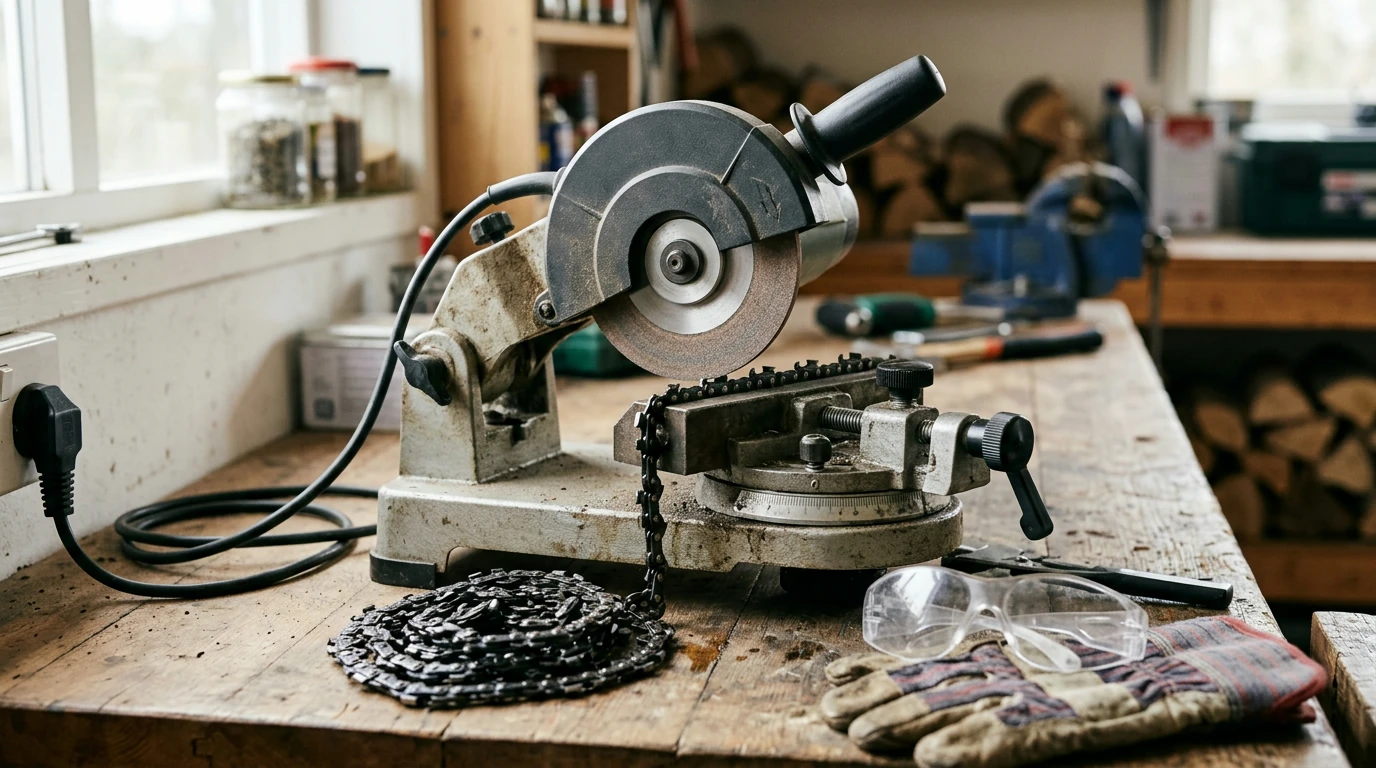
Electric Chainsaw Sharpener: 230W Chain Grinder with Adjustable Angles for Consistent Cuts
A sharp chain cuts faster, pulls less, and puts less strain on a saw and the operator. An electric chainsaw sharpener with a chain grinder and adjustable angles helps restore tooth geometry with repeatable settings—useful for homeowners who cut firewood and for frequent users who want uniform results across multiple chains. Instead of “good enough” edges that vary tooth to tooth, a bench-style grinder can help you dial in the same angle and depth every time, so the saw tracks straighter and feeds more predictably.
What an electric chain grinder does (and why adjustable angles matter)
An electric chain grinder sharpens by re-forming each cutter with a grinding wheel, rather than relying on hand pressure and feel. The goal isn’t just “sharper”—it’s consistent geometry across the entire loop.
- Grinds each cutter to a consistent top-plate angle, length, and edge profile for smoother cutting.
- Adjustable angles help match the chain’s recommended geometry (common profiles include 25°, 30°, and 35° depending on chain and use).
- Repeatable settings reduce the “one tooth sharper than the next” problem that can cause crooked cuts.
- Useful for multiple chains: once dialed in, sharpening several loops becomes faster and more uniform than freehand filing.
Angle accuracy matters because the top-plate angle affects how aggressively the cutter bites. Too steep (or inconsistent left vs. right), and the chain may chatter, grab, or pull to one side. Too shallow, and it may cut slowly and make fine dust instead of chips.
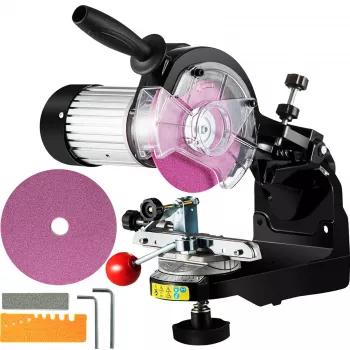
Product overview: Electric Chainsaw Sharpener – 230W Chain Grinder with Adjustable Angles
This bench-style sharpener is built for repeatable results: set your angles, clamp the chain, and grind each cutter with the same approach. The 230W motor provides steady power for routine touch-ups and for bringing back teeth that have gone truly dull.
- 230W electric motor provides steady grinding power for routine touch-ups and restoring dull cutters.
- Adjustable angle setup supports consistent sharpening across left- and right-hand cutters.
- Best suited for users who want repeatable results and a dedicated sharpening station (bench or sturdy work surface).
- In stock: 120 units.
At-a-glance specs
| Model | Power | Angle adjustment | Best for | Price |
|---|---|---|---|---|
| Electric Chainsaw Sharpener – Chain Grinder | 230W | Adjustable | Repeatable chain sharpening at home or shop | $120.51 |
Electric Chainsaw Sharpener – 230W Chain Grinder with Adjustable Angles
Setting up for accurate sharpening
Grinders reward careful setup. A few minutes of prep can be the difference between a chain that slices straight and one that wanders.
- Secure mounting: fasten the sharpener to a stable bench to minimize vibration and keep angles consistent.
- Confirm chain type and recommended angles: check the chain packaging or manufacturer documentation for top-plate angle guidance.
- Inspect chain condition first: replace cracked, heavily damaged, or excessively worn chains instead of grinding aggressively.
- Mark the first tooth: use a marker on the first cutter sharpened to ensure every cutter gets the same number of passes.
If you’re newer to chain geometry, manufacturer resources can help you confirm the right approach for your exact chain style. See guidance from STIHL (chain sharpening basics) and Oregon Products (chain geometry and sharpening resources).
How to sharpen a chain with an electric grinder (repeatable method)
A consistent, light-touch routine typically produces the most uniform edges and avoids heat damage.
- Clean the chain so grit does not contaminate the grinding wheel or distort the edge.
- Set the sharpening angle to match the chain’s spec (commonly 30° for many general-purpose chains).
- Clamp the chain securely in the holder so tooth position is consistent from cutter to cutter.
- Use light passes: brief contact reduces heat buildup and helps preserve cutter hardness.
- Grind to equalize cutter length: match the shortest cutter to avoid uneven cutting and side pull.
- Flip/adjust for the opposite cutter direction and repeat with the same number of light passes.
Common grinder settings to double-check before starting
| Checkpoint | What to look for | Why it matters |
|---|---|---|
| Top-plate angle | Matches chain spec (often 25°–35°) | Incorrect angle can reduce cutting speed or increase kickback risk |
| Tooth stop/advance | Consistent tooth position each time | Prevents over-grinding and uneven cutter lengths |
| Grinding pressure | Light, controlled contact | Reduces overheating and preserves edge quality |
| Cutter length consistency | All cutters match the shortest | Helps the saw cut straight |
Avoiding common mistakes
Maintenance and shop safety essentials
For broader shop and PPE guidance, review general safety resources from OSHA.
When this type of sharpener is the right choice
More in-stock picks
- L-Shaped 50-Inch Gaming Desk with CPU Storage & Side Bag for Home Office
- Wooden Montessori Balance Toys set
FAQ
What angle should a chainsaw chain be sharpened at?
Common top-plate angles fall in the 25°–35° range, with 30° being a frequent general-purpose setting. The correct angle depends on your specific chain model, so check the manufacturer guidance and keep the left and right cutters matched for straight cutting.
Can an electric chain grinder damage a chain?
Yes—damage can happen if you overheat the cutters, remove too much material, or sharpen with inconsistent angles. Avoid problems by using light, brief passes, setting a consistent stop, and replacing chains that are cracked, severely damaged, or worn past safe limits.
How often should a chainsaw chain be sharpened?
Sharpen when performance changes: dusty chips instead of larger chips, increased feed pressure, the saw pulling to one side, or smoke despite proper lubrication. Frequent light touch-ups typically extend chain life compared with waiting until the chain is severely dull.











Leave a comment