15-Function Bread Maker: Gluten-Free Loaves Made Easy
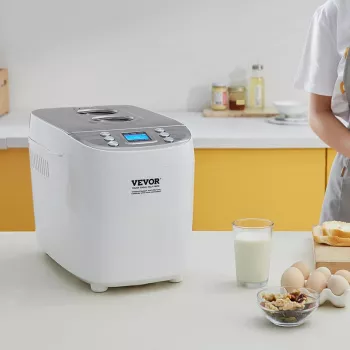
Fresh Bread, Minimal Effort: What an Automatic Bread Maker Can Do
A modern automatic bread maker can take you from ingredients to a finished loaf with very little hands-on work. It handles the repetitive steps—mixing, kneading, proofing, and baking—while keeping timing and temperature consistent. That reliability is especially helpful for gluten-free loaves, where structure depends more on controlled mixing and careful rising than on gluten development.
If you’re shopping for a versatile machine, a 15-function model is designed to cover everyday breads plus specialty tasks like dough prep, quick breads, and even jam—so you can bake on your schedule without hovering over the counter.
What a 15-function bread maker handles from start to finish
Most 15-program bread makers automate the full pipeline: mix → knead → rise/proof → bake → keep warm (depending on the program). Instead of guessing how long to knead or when the dough is ready, the machine runs a preset sequence tailored to the dough type.
Multiple programs matter because different recipes behave differently. Whole wheat dough often needs extra time to hydrate and develop; sweet breads can brown faster due to sugar; quick breads rely on baking powder or soda rather than yeast. A delay timer can be a game-changer for morning routines—load ingredients at night and wake up to fresh bread—while keep-warm can hold the loaf briefly after baking (best for short windows so crust doesn’t soften too much).
Many machines also offer loaf size and crust color options. Those simple controls make it easier to dial in doneness and browning across recipes, especially when you switch between standard wheat bread and gluten-free formulas.
Common program types and when to use them
| Program type | Best for | What to expect |
|---|---|---|
| Basic/White | Everyday sandwich loaves | Standard knead and proof with balanced bake time |
| Whole Wheat | Higher-fiber doughs | Longer knead/proof to hydrate grains and develop structure |
| Sweet | Enriched dough (sugar, eggs, butter) | Adjusted rise and bake to prevent over-browning |
| Quick Bread | Baking powder/soda recipes | No yeast rise; mixes then bakes |
| Dough Only | Pizza, rolls, shaping by hand | Stops after proof so dough can be formed and baked separately |
| Jam/Preserve | Fruit spreads | Heats and stirs to thicken without constant supervision |
Why the gluten-free setting matters
Gluten-free dough usually behaves more like a thick batter than an elastic wheat dough. Since there’s no gluten network to trap gas and hold shape, the “right” mixing intensity and rise timing can look different—sometimes dramatically different—than a standard bread cycle.
A dedicated gluten-free program typically changes the knead/mix pattern (often less traditional kneading and more structured mixing) and modifies proof time to better match gluten-free structure development. Temperature consistency matters, too: gluten-free loaves can collapse if over-proofed or if the batter warms unevenly. For the best results, use recipes designed specifically for bread machines and include appropriate binders (like xanthan gum or psyllium) while measuring carefully.
When buying gluten-free ingredients, it also helps to understand labeling basics; the FDA’s guidance on “gluten-free” labeling is a useful reference for packaged foods (FDA: Gluten-Free Labeling Rule).
Daily-use features that make baking simpler
Day-to-day convenience is what turns a bread maker from an occasional gadget into a weekly habit. Loaf size options help match your household (and can reduce waste). Smaller loaves often bake more evenly and may slice more cleanly—handy for gluten-free bread that can be delicate when warm.
Crust color control is another practical tool. Gluten-free and sweet recipes tend to brown faster because of different starches and sugars, so a lighter crust setting can prevent an over-dark exterior before the center finishes baking.
How to get better gluten-free loaves (texture, rise, and slicing)
For additional gluten-free diet guidance, the Celiac Disease Foundation offers practical education and resources (Celiac Disease Foundation: Gluten-Free Diet Basics).
Cleaning, care, and long-term reliability
If loaves frequently stick, a small amount of food-safe oil on the paddle shaft can help, and it’s worth double-checking that the pan is seated correctly before starting. For general kitchen cleaning and cross-contamination prevention, USDA food safety guidance is a solid baseline (USDA FSIS: Kitchen Food Safety).
Is this the right fit for your kitchen?
Shop in-stock picks
- Automatic Bread Maker with 15 Functions & Gluten-Free Setting — a flexible option for standard loaves, dough-only projects, and gluten-free baking.
- Wooden Montessori Balance Toys set — a simple way to keep little hands busy while bread bakes.
- L-Shaped 50-Inch Gaming Desk with CPU Storage & Side Bag for Home Office — useful if you like to set a delay timer and work while the loaf finishes.
FAQ
Does the gluten-free setting prevent cross-contact with gluten?
No. A program changes timing and mixing, but it doesn’t remove gluten residue; dedicate a pan/paddle when needed or clean thoroughly, avoid shared flour dust, and follow medical guidance for celiac disease.
What’s the difference between gluten-free bread and quick bread programs?
The gluten-free program is typically designed for yeast-risen gluten-free loaves with adjusted mixing and proofing, while quick bread programs are usually for baking powder/soda recipes that mix and bake without a yeast rise.
Why did a gluten-free loaf sink after baking?
Common causes include too much liquid, over-proofing, overly warm ingredients, a weak or missing binder, opening the lid at the wrong time, or measuring errors. Adjust one variable at a time (often slightly reducing hydration) and re-test.









Leave a comment