Tall Cat Tree with Hammock & Condo: Setup Guide
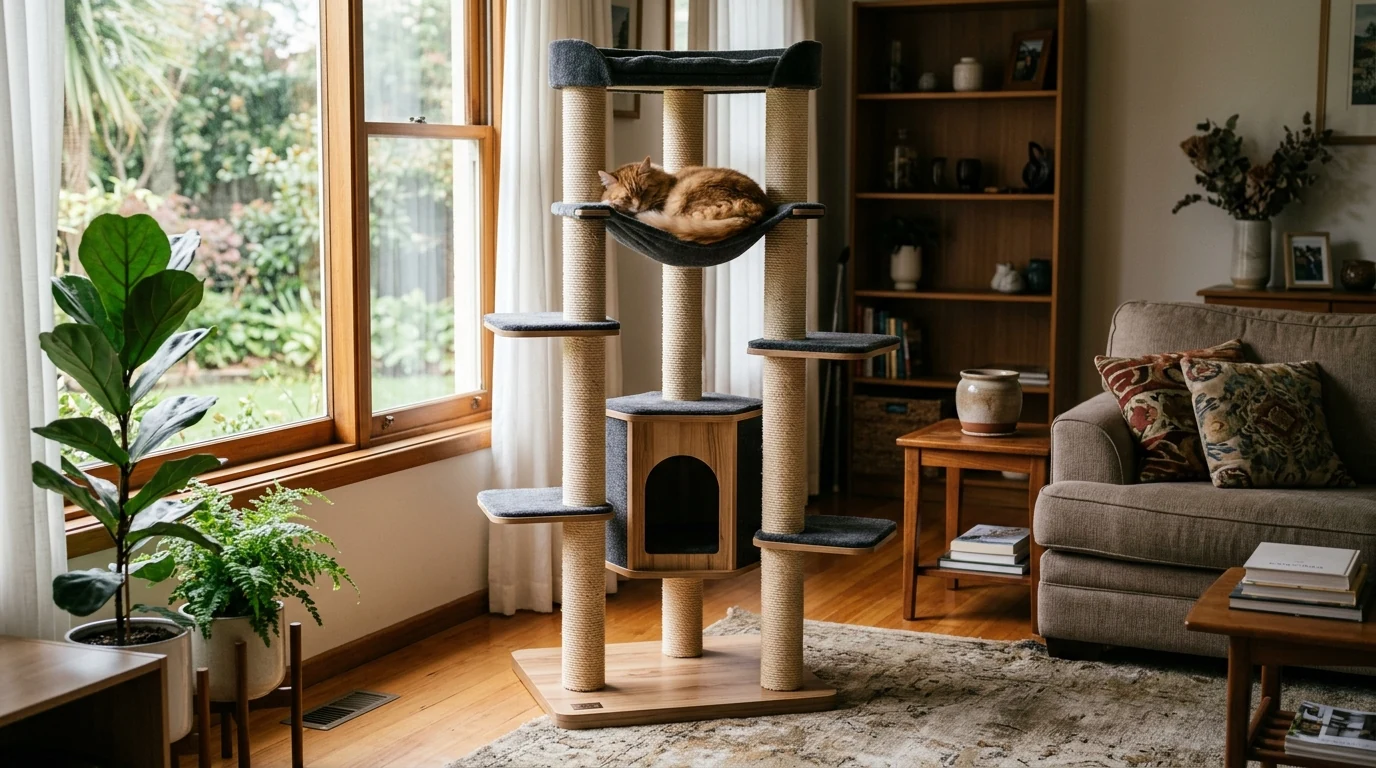
Tall Cat Tree with Hammock, Scratching Posts, and Condo: A Home Base for Climbing, Lounging, and Quiet Time
Cats do best when their home includes vertical space, dedicated scratching zones, and a few “off-duty” hiding spots. A tall cat tree with a hammock, scratching posts, and a condo brings those needs together in one footprint—helping keep play energetic, naps uninterrupted, and furniture less tempting. Our team likes this style of setup because it creates a clear, repeatable routine for your cat: climb up, look around, scratch, then settle in.
What this tall cat tree adds to everyday life
A well-planned cat tree isn’t just a toy—it’s a daily-use “base camp” that can reduce stress, channel energy, and make the room feel more cat-friendly without turning your whole home into scattered pet gear.
- Vertical territory to climb and perch, supporting natural curiosity and confidence
- A hammock-style lounge that invites full-body relaxation (especially after zoomies)
- Multiple scratching posts to steer claw care toward a consistent, rewarding target
- A condo retreat that gives cats an enclosed spot for downtime or stress breaks
- One organized “cat zone” so you don’t need separate scratchers, beds, and hideouts around the room
If you’re setting up a dedicated climbing-and-rest station, our Tall Cat Tree with Large Hammock, Scratching Posts & Condo for Large Cats is a practical starting point for households that want one consolidated piece that covers multiple behaviors.
How to pick the right spot at home (so it gets used)
Placement makes or breaks daily use. Cats don’t “commit” to a cat tree just because it’s tall—they commit because it sits where their life already happens and where they feel secure using it.
- Place it where your cat already spends time; near the main living area often beats a quiet corner
- Choose a location with a view—near a window is a strong daily-use booster
- Keep a little clearance around the base so your cat can approach from more than one side
- Avoid blocking high-traffic walkways; cats prefer routes that feel safe and predictable
- If you have multiple cats, position it where no single cat can “guard” it too easily
Placement quick guide
| Home situation | Best placement | Why it works |
|---|---|---|
| Single cat, small space | Near the sofa or desk area | Encourages daily lounging and scratching without needing extra accessories |
| Multiple cats | Open area with two approach paths | Reduces bottlenecks and helps cats share territory with less tension |
| High-energy cat | Near a window or favorite play zone | Turns climbing into an outlet and keeps play centered in one place |
| Shy or newly adopted cat | Quieter side of the main room | Offers visibility without feeling exposed; condo becomes a reliable retreat |
If your cat likes to hang out with you while you work, pairing a cat tree near your workspace can help them settle instead of interrupting your keyboard time. Many customers place a tree adjacent to a home office layout like our L-Shaped 50-Inch Gaming Desk with CPU Storage & Side Bag for Home Office so the cat gets an “approved” perch close to you.
Hammock, condo, and posts: what each part is for
When each zone has a purpose, your cat naturally rotates through the structure instead of ignoring half of it.
- Hammock: ideal for cats who prefer a cradled, supported nap spot; great after active play or meals
- Condo: helps cats decompress, hide during noise, or take uninterrupted naps away from household activity
- Scratching posts: supports healthy claw maintenance and a full-body stretch; multiple scratching surfaces help the habit stick
- Vertical levels: creates a natural routine—climb, perch, watch, rest—without needing multiple furniture pieces
- Intentional introductions: a little catnip on posts, a familiar blanket in the condo, and a treat trail to the hammock can speed up adoption
For broader enrichment ideas that pair well with a vertical cat zone, you can also reference guidance from the ASPCA and the American Association of Feline Practitioners (AAFP).
A simple setup and training routine that builds habits fast
Your goal is to make the tree the easiest, most rewarding option for scratching and resting—especially in the first week, when routines form quickly.
If furniture scratching is already a habit, it helps to make the tree the “default” by positioning it near existing scratching hotspots at first. Resources from the Humane Society of the United States can also support a consistent, behavior-friendly approach.
Keeping it tidy and durable for daily use
Who this style of cat tree is best for
FAQ
Will a tall cat tree work for large cats?
Yes, as long as you prioritize stability, roomy resting areas, and a flat placement surface. Start with step-by-step encouragement so your cat learns the safest climbing route, and make sure the hammock and condo are used as comfortable full-body lounging zones.
How do cats learn to use the scratching posts instead of furniture?
Make the posts the easiest and most rewarding option: place the tree near the usual scratching area, add catnip or silvervine, and reward the first successful scratches. If your cat targets furniture, redirect calmly to the post and reinforce the right choice consistently.
Where should the cat condo be placed on the tree to help a shy cat?
Use the condo as a predictable safe zone by placing the tree on the quieter side of the main room, where your cat can still observe without feeling exposed. Add familiar scent inside and let your cat choose the condo without being forced, rewarding calm use when they settle in.









Leave a comment