Wooden Swing Set: Dual Swings, Slide, Wall & Chalkboard
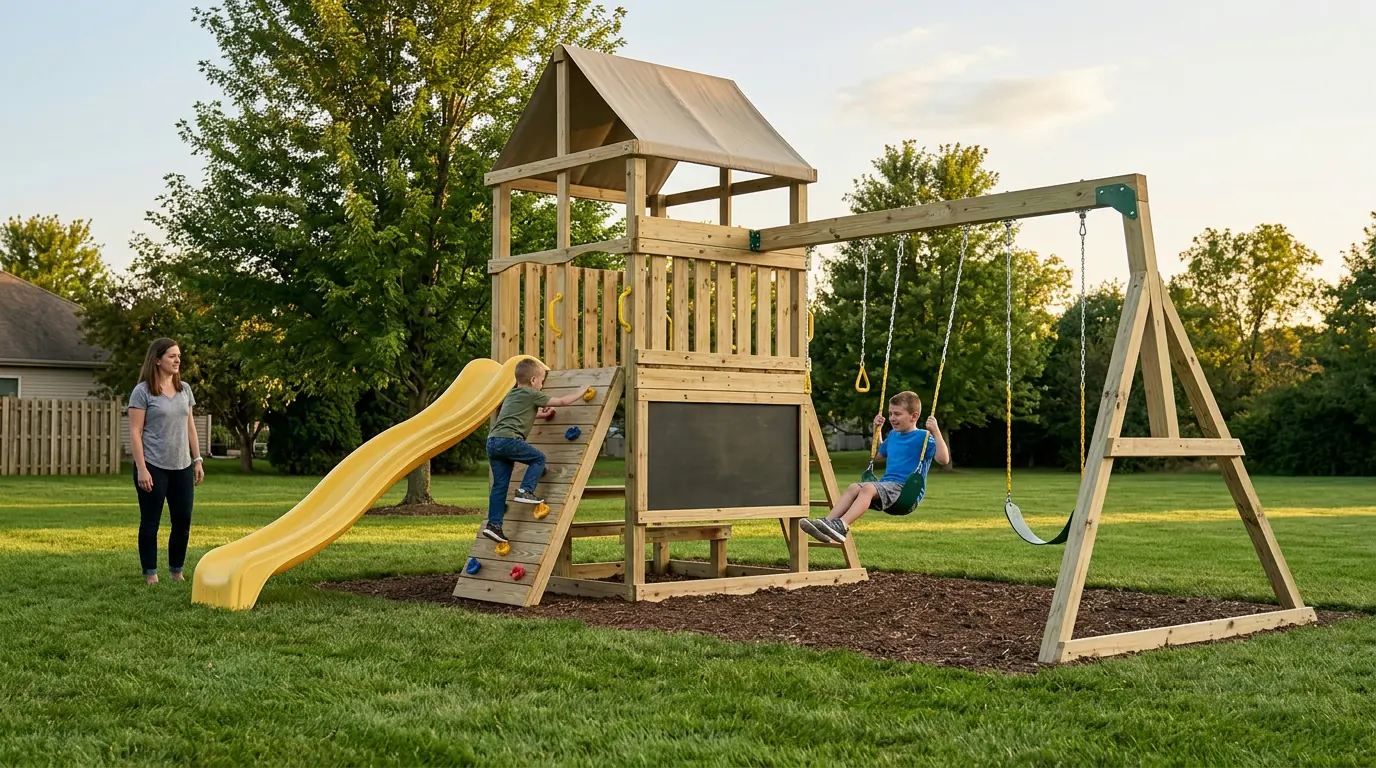
Wooden Swing Set with Dual Swings, Slide, Climbing Wall & Chalkboard for Kids
A backyard playset can turn everyday outdoor time into active play, pretend adventures, and skill-building. This wooden swing set combines two swings, a slide, a climbing wall, and a chalkboard so kids can switch between movement, challenge, and creative play without leaving the yard.
If you’re building a go-to outdoor spot for siblings, neighbors, or weekend playdates, having multiple “stations” matters. It helps kids stay engaged longer, keeps lines shorter, and makes it easier to set simple rules for safe, cooperative play.
What this swing set includes
- Dual swings for side-by-side play, turn-taking, and shared outdoor time.
- Slide for quick, repeatable play that works well for mixed ages (with supervision).
- Climbing wall to encourage coordination, balance, and confidence through incremental challenge.
- Chalkboard area for drawing, games, and imaginative play breaks between active bursts.
- Wood construction for a classic backyard look and a sturdier feel compared with many lightweight plastic sets.
For shoppers comparing options, the mix of “move fast” features (swings and slide) plus a “slow down” feature (chalkboard) can be a big win—especially for kids who need a breather between bursts of high energy.
Feature checklist and how each part supports play
A well-rounded playset supports different styles of play across the same afternoon. Some kids want constant motion; others prefer imaginative games or small challenges they can master step by step.
- A good playset offers both high-energy movement (swings/slide) and “pause” activities (chalkboard) to keep kids engaged longer.
- Multiple stations reduce bottlenecks when siblings or friends play together, helping minimize conflicts over turns.
- Climbing plus sliding creates natural play circuits that promote repeated movement and stamina-building.
Play components at a glance
| Component | What it encourages | Parent notes |
|---|---|---|
| Dual swings | Rhythm, balance, cooperative play | Confirm swing height and spacing before final tightening; supervise younger children. |
| Slide | Confidence, gross motor movement | Keep the landing zone clear; consider a soft ground surface. |
| Climbing wall | Strength, planning, coordination | Start with spotter help until kids learn stable foot placement. |
| Chalkboard | Creativity, rules-based games, quiet breaks | Use washable chalk; store chalk in a small weather-resistant container. |
For broader guidance on playground safety basics, it’s worth reviewing the CPSC Public Playground Safety Handbook and looking for products that align with common expectations for home equipment. Many manufacturers also reference ASTM playground equipment standards in their testing and design approach.
Backyard placement and space planning
Where you place a swing set can matter as much as what you buy. A thoughtful layout helps kids move safely between stations and helps adults supervise without hovering in the “traffic lanes.”
- Choose a level area with good drainage; uneven ground can affect stability and swing clearance.
- Allow open space around the set for safe entry/exit on swings and slide; keep away from fences, trees, fire pits, and hardscaping edges.
- Plan a clear “runway” behind and in front of the swings so kids don’t cross the swing path while others are using it.
- Consider sun exposure: partial shade can make the slide and climbing area more comfortable in hot weather.
- Place the chalkboard where it’s easy to supervise without blocking swing or slide traffic.
Tip for busy yards: set a simple “waiting spot” marker (like a small patio stone or cone) off to the side of the swings so kids have a clear place to stand while waiting their turn.
Safety and durability habits that matter
Outdoor play is supposed to feel free and fun, but a few consistent habits go a long way toward preventing common issues like loose hardware, slippery landing zones, and wear on moving parts.
- Do a quick pre-play check: feel for loose hardware, frayed swing components, or cracks/splinters in high-touch areas.
- Use an impact-absorbing ground surface (such as appropriate playground mulch or rubber options) to reduce injury risk from falls.
- Teach simple rules early: one rider per swing, hold on with both hands, wait until the slide path is clear, no climbing up the slide.
- Weather care: keep the wood clean, remove standing water, and follow any care guidance on the product page for sealing/staining schedules.
- Seasonal tightening is normal for outdoor structures; temperature and humidity changes can cause wood movement over time.
Play is also a key part of healthy development—physically, socially, and emotionally. The American Academy of Pediatrics highlights how play supports skills kids use well beyond childhood, making a backyard play space a practical investment in everyday well-being.
Assembly and setup expectations
Ways to keep kids engaged beyond the first week
Related picks available now
- Wooden Swing Set with Dual Swings, Slide, Climbing Wall & Chalkboard for Kids
- Wooden Montessori Balance Toys set
- 1:20 Scale RC Dump Truck Excavator with Remote Control for Kids
FAQ
How much space is needed around a swing set with swings and a slide?
Leave clear zones in front of and behind the swings, plus open space at the slide exit for safe stopping and walking away. Keep the set well away from fences, trees, and hard edges, and install on level ground. Check the product’s manual for exact clearance guidance for your model.
What ground surface works best under a backyard playset?
Impact-absorbing surfaces such as engineered wood fiber/mulch or rubber surfacing are commonly used to help reduce injury risk from falls. Avoid hard surfaces like concrete, and remember that correct depth and ongoing maintenance are key to keeping the surface protective.
How often should hardware be checked and tightened?
Check hardware right after assembly, then inspect routinely—often weekly at first, and then monthly or seasonally depending on use and weather. Also recheck after severe weather, and watch for wear on swing components and any areas that loosen with repeated movement.











Leave a comment