13-Inch Laminate and Vinyl Floor Cutter
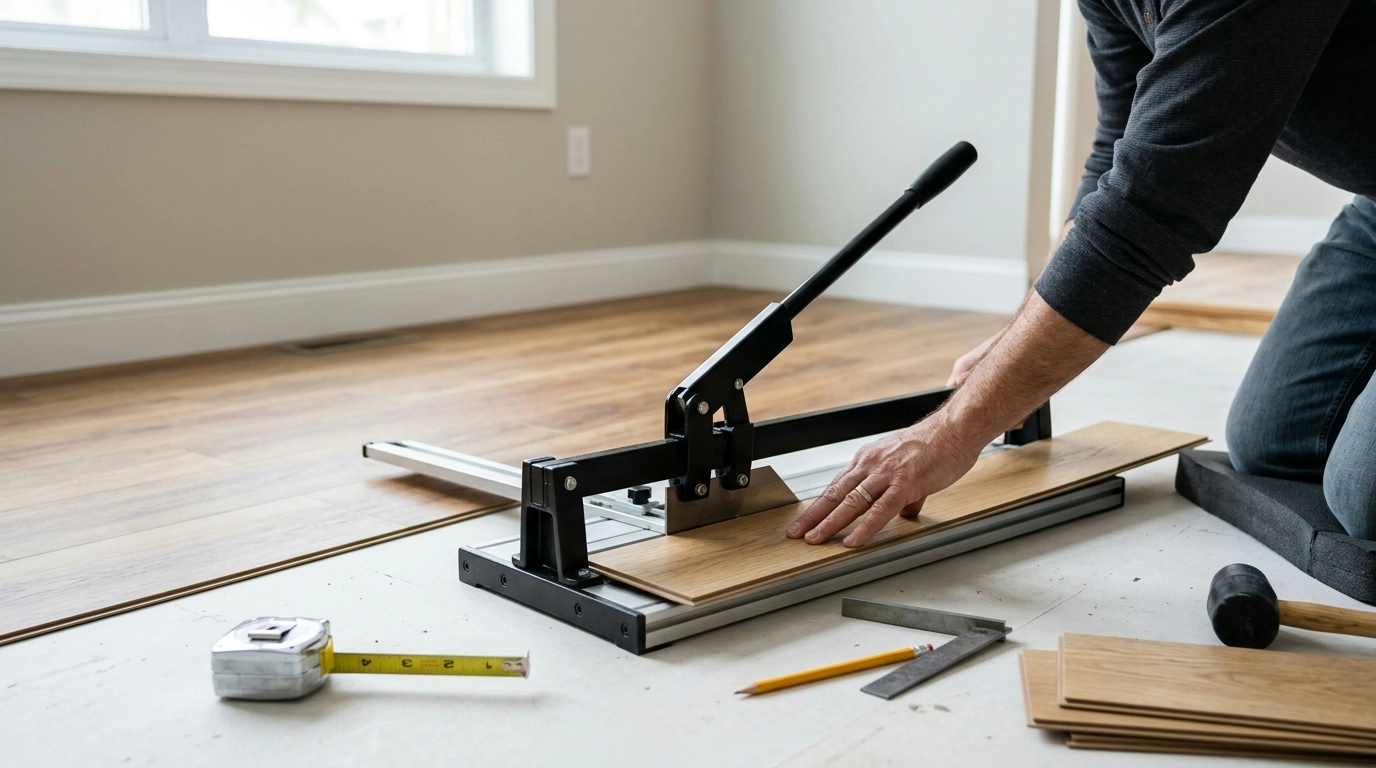
13-Inch Laminate and Vinyl Floor Cutter for Fast, Clean, Low-Dust Cuts
Laminate and vinyl plank installs go faster when cuts are accurate, repeatable, and don’t fill the room with dust. A dedicated floor cutter can handle straight cuts quickly and keep the work area quieter and cleaner than many powered tools—especially helpful for apartment projects, occupied homes, and small spaces.
What a 13-inch floor cutter is designed to do
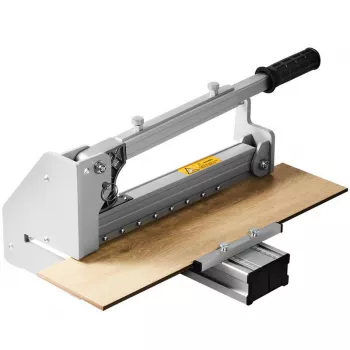
A 13-inch laminate/vinyl floor cutter is built for fast, consistent straight cuts across common plank and tile widths. Instead of grinding material into airborne dust like many saws, it shears or splits the board with a controlled manual action, which can make indoor work more comfortable.
- Makes quick straight cuts in many laminate and vinyl plank/tile products without producing sawdust
- Pairs well with click-lock plank installations where consistent end cuts speed up row-by-row progress
- Helps reduce cleanup time compared with sawing, which can be useful when working indoors
- Best suited for materials that fit within the cutter’s width capacity; thicker or denser products may require different tools
- Typically used for crosscuts and short trims; specialty cuts may still need a saw or knife depending on the flooring type
Highlights of the 13-Inch Laminate and Vinyl Floor Cutter
If most of your cuts are end cuts and short trims, a cutter can become the “main tool” you reach for during layout. The workflow is simple: measure, mark, align, and cut—then move immediately to the next piece without powering up a saw or managing dust collection.
- Sized to handle flooring pieces up to a 13-inch cutting width, a common dimension for planks and tiles
- Manual cutting action supports quiet work sessions and can limit airborne dust compared with powered cutting
- Useful for repeat cuts when building multiple rows—measure, mark, align, and cut
- A good fit for DIY installers who want speed without setting up a saw station
- Works best when the blade and cutting surface are kept clean and the material is fully supported during the cut
For a dedicated option designed around this workflow, see the 13-Inch Laminate and Vinyl Floor Cutter.
When a cutter is the better choice than a saw or knife
Not every flooring job needs the same cutting setup. A floor cutter shines when you’re working in finished spaces, trying to keep noise down, or knocking out lots of repeated straight cuts. For long rip cuts (lengthwise) and detailed notches, most installers still keep a supplemental tool nearby.
- Indoor projects where dust control matters (finished rooms, apartments, homes with pets or kids)
- Short sessions where setting up a miter/table saw is inconvenient
- Repetitive straight cuts for end pieces and row starts
- Situations where noise reduction is important
- If the job includes many rip cuts (lengthwise cuts) or intricate notches, plan to supplement with another tool
Common cutting options for laminate and vinyl flooring
| Tool | Best for | Trade-offs |
|---|---|---|
| Manual floor cutter | Fast straight crosscuts; low dust; quieter indoor work | Limited to width capacity; not ideal for long rip cuts or complex notches |
| Miter saw (with suitable blade) | Precise crosscuts and angles | Noisy; creates dust; requires setup and safety precautions |
| Table saw (with suitable blade) | Rip cuts and repeated sizing | Dusty; higher risk if misused; less convenient indoors |
| Utility knife (score-and-snap, where applicable) | Some LVP/LVT products designed for scoring | Not ideal for thicker/rigid cores; can wander if rushed |
| Jigsaw/oscillating tool | Notches and irregular shapes around jambs/vents | Slower; can chip edges; dust varies by material |
Step-by-step: getting cleaner, more accurate cuts
Clean results come from alignment and steady pressure more than brute force. The cutter is meant to do the work—your goal is to keep the plank stable, square, and supported.
- Measure the needed piece length from the installed row, accounting for the expansion gap at the wall.
- Mark the cut line clearly; use a square for straighter alignment.
- Place the plank/tile fully against the fence/guide and keep it flat to prevent edge chipping.
- Apply steady pressure through the cut rather than forcing a fast snap.
- Test-fit the piece before moving to the next row; small adjustments are easier early.
- For tricky transitions and jambs, rough-cut with the cutter (when possible) and finish with a specialty tool if needed.
Practical tips for safer, smoother workflow
For baseline tool safety reminders (manual and powered), review OSHA’s guidance here: OSHA: Hand and Power Tools. For broader jobsite safety resources, the NWFA has additional references: NWFA: Jobsite and Tool Safety Resources.
Care and maintenance that helps cuts stay clean
Who this cutter suits best
More in-stock picks
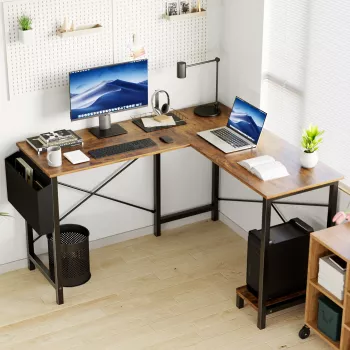
- L-Shaped 50-Inch Gaming Desk with CPU Storage & Side Bag for Home Office
- Wooden Montessori Balance Toys set
FAQ
Can a 13-inch floor cutter handle rigid core vinyl planks?
Many floor cutters can cut rigid core vinyl planks, but results depend on the plank’s thickness and density. Check your flooring specs and do a test cut first; very thick or highly rigid boards may cut more consistently with a saw.
Does a floor cutter replace a miter saw for a full installation?
It can cover a large share of straight crosscuts quickly, but most full installs still need another tool for notches and irregular cuts (often a jigsaw or oscillating tool) and sometimes a table saw for long rip cuts. A cutter typically reduces the number of saw cuts rather than eliminating them.
How can chipping at the cut edge be reduced?
Keep the plank fully supported and pressed flat against the fence, then cut with steady pressure instead of snapping too fast. If edges start to fray, clean the cutting area and check the blade condition; test-fitting each piece helps catch small issues before you lock in the next row.









Leave a comment